



For over a decade, the relationship between Beijing and the crypto currency market has been a high-
stakes game of cat-and-mouse. While the world remembers the massive 2021 crackdown, a new
chapter was written in February 2026. The People’s Bank of China (PBOC) didn’t just reiterate
old rules—it launched a surgical, high-tech lockdown that effectively “patched” every remaining
loophole in the system.
If you are wondering why China banned crypto, the answer has evolved. It is no longer just
about protecting grandmas from scams; it’s a strategic move to ensure that the Digital Yuan
remains the only digital player on the field.
When Did China Ban Cryptocurrency? A Timeline of
Control
To understand the current status of whether crypto is illegal in China, we have to look at the
“Noose Timeline.” China didn’t stop bitcoin overnight; it squeezed it slowly:
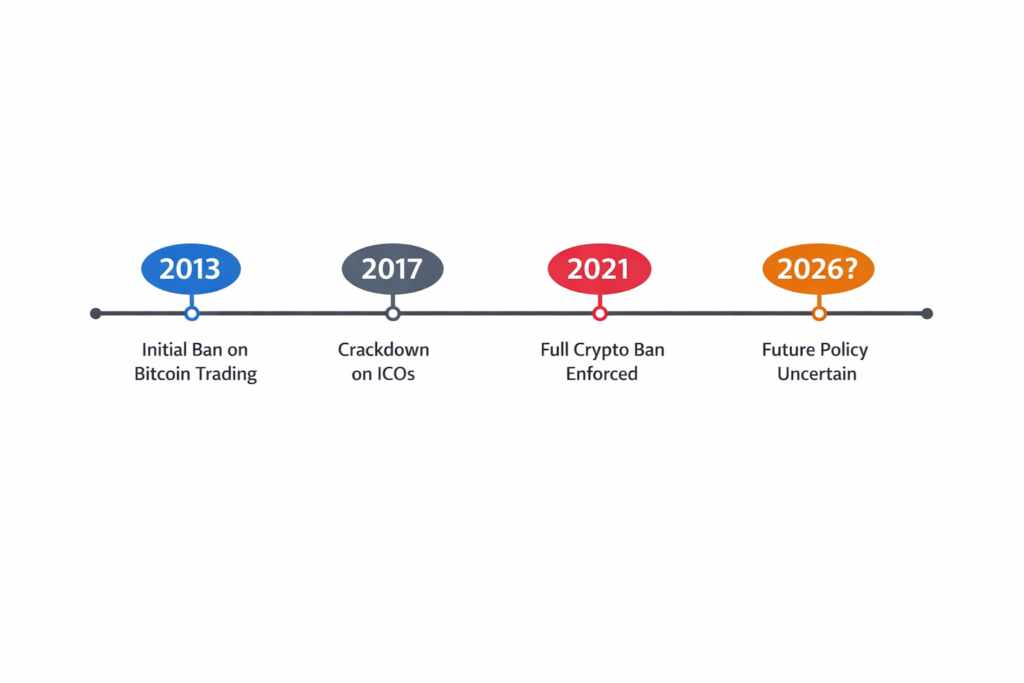
2013: Banks were barred from handling Bitcoin China transactions.
2017: Initial Coin Offerings (ICOs) and domestic exchanges were shuttered.
2021: The “Blanket Ban.” Crypto currency regulation reached its peak, outlawing all mining and
trading.
2026: The “Shadow Ban” expansion. New laws explicitly targeted stablecoins and Real-
World Asset (RWA) tokenisation, making even offshore services for mainland
residents a criminal offence.
The Core China Crypto Ban Reason
There isn’t just one China crypto ban reason; there are four pillars that the government stands
on to justify its “Great Wall of No.”
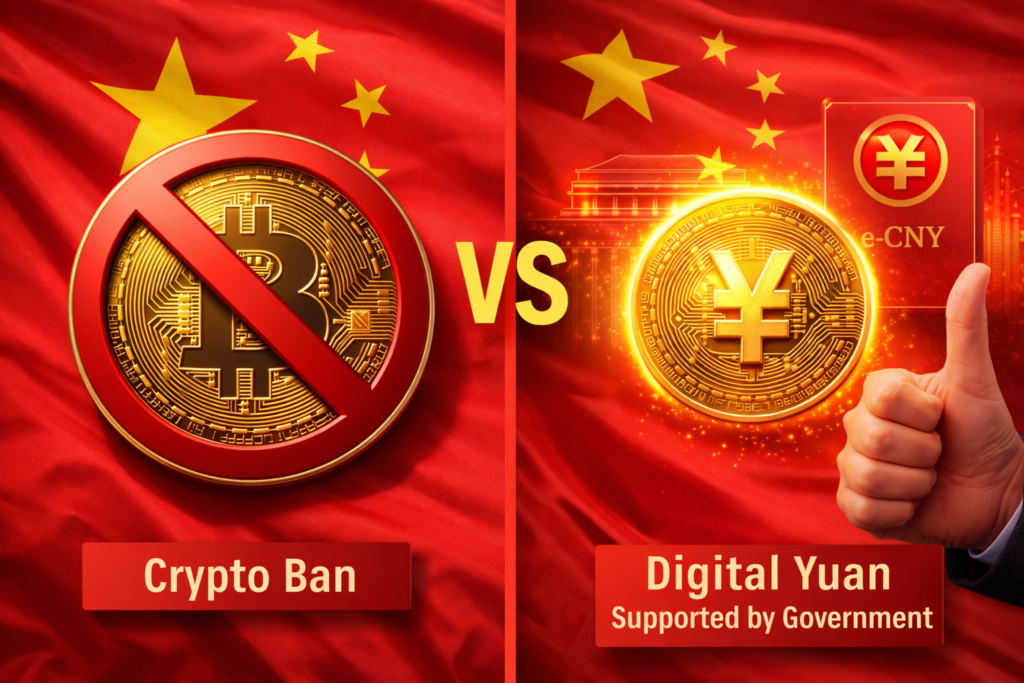
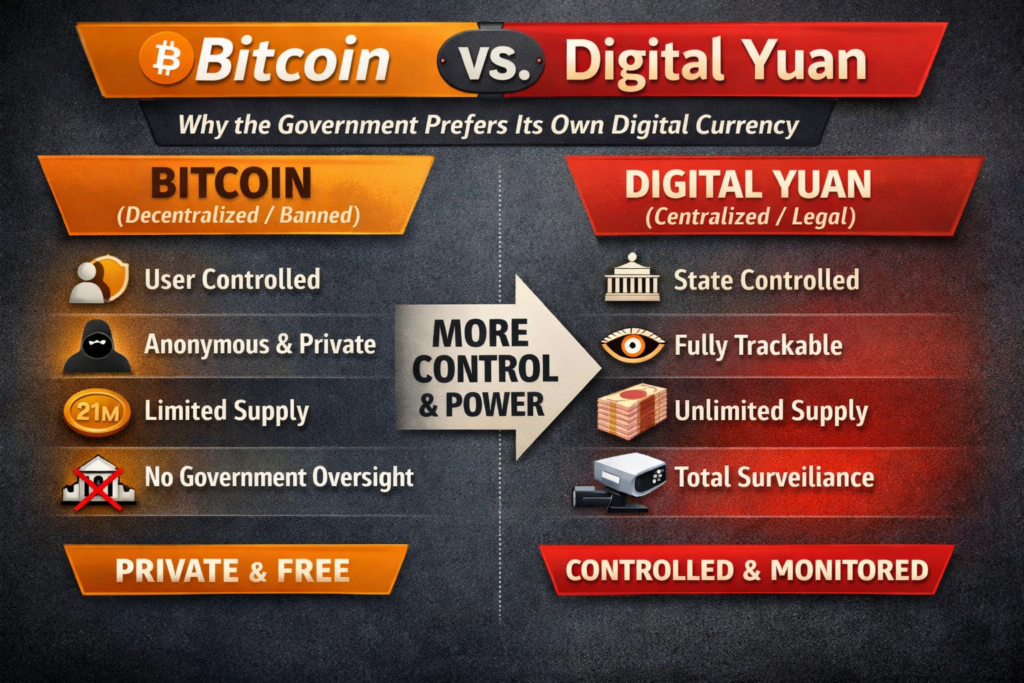
1.Sovereignty and the e-CNY
The most significant reason for the crypto currency ban is competition. On January 1, 2026, China broke
global traditions by allowing the Digital Yuan (e-CNY) to pay interest, effectively turning it
into a “Digital Deposit.” You cannot have a state-controlled monopoly on money if a
decentralised alternative like Bitcoin is ava2ilable.
2.Plugging the “Leaky Pipes” (Capital Flight)
China has a strict $50,000 annual limit on moving money abroad. For years, crypto china users
used stablecoins like USDT to bypass these controls. By 2026, the PBOC identified this as a
national security risk, leading to the latest crackdown on “unapproved” stablecoins.
3.Financial Stability & Speculation]
As bitcoin prices surged past $100,000 in late 2025, retail speculation in China began to bubble
again through underground OTC desks. The state views this volatility as a threat to social order.
Under the new 2026 guidelines, crypto currency transactions are now classified as “violations of public
order,” leaving investors with zero legal protection.
4.Carbon Goals vs. Bitcoin China
While many thought the China Bitcoin mining story ended in 2021, “ghost mining” persisted. In
2026, regulators reaffirmed that mining is a “liquidated” industry, ensuring power is reserved for
AI and state manufacturing rather than decentralised hashrates.
The 2026 “RWA” Lockdown
The newest development in china crypto currency policy is the ban on Real-World Asset (RWA)
tokenization. Throughout 2025, investors were tokenizing property and stocks to trade them on
blockchains. The February 2026 mandate officially killed this “gray zone,” stating that unless the
infrastructure is state-approved and permissioned, it is strictly illegal.
Conclusion: Is Crypto Illegal in China Forever?
As of 2026, the answer is a resounding yes for the mainland. While Hong Kong operates as a
“regulated laboratory” for digital assets, the mainland has chosen a path of permissioned
centralisation.
China isn’t waiting for the crypto currency revolution to end; it is building a parallel, state-monitored
digital reality. The crypto currency regulation we see today is the final brick in a wall designed to keep
decentralised assets out and the Digital Yuan in.
What do you think? Will the “Invisible Wall” eventually crumble, or has China successfully
built a future without Bitcoin? Drop your thoughts in the comments below!






Leave a Reply